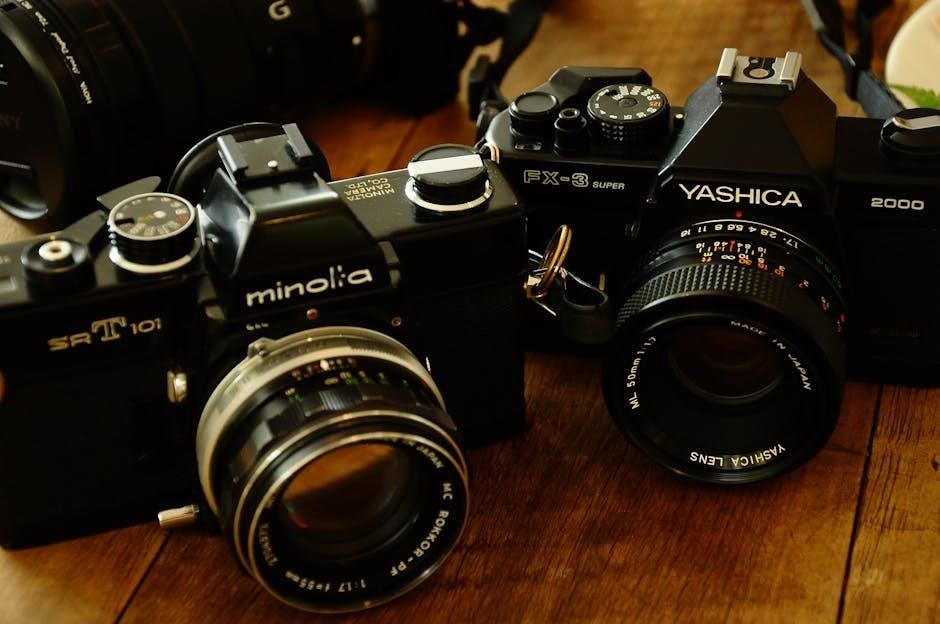
The Minolta Maxxum 7000, released in 1985, marked a pivotal moment in autofocus SLR technology․ Its service manual details operation, offering a comprehensive guide for owners․
Overview of the Camera System
The Minolta Maxxum 7000 represents a groundbreaking autofocus system, integrating a motor-driven lens mount (Minolta A-mount) for swift and accurate focusing․ The owners manual details how this system operates, explaining the interplay between the camera body and compatible lenses․ It’s a 35mm SLR featuring programmed auto-exposure, shutter-priority, and manual modes․
The camera’s electronic controls, detailed within the manual, manage aperture and shutter speed․ Its innovative design, as described in service documentation, significantly impacted subsequent camera development, establishing Minolta as a leader in photographic innovation․
Historical Context and Significance
Released in 1985, the Minolta Maxxum 7000 was the world’s first commercially successful autofocus SLR camera․ The owners manual arrived alongside, guiding users through this revolutionary technology․ It disrupted the established manual-focus market, prompting competitors to rapidly develop their own autofocus systems․

Its significance lies in democratizing autofocus, making it accessible to amateur photographers․ Service manuals confirm its impact on camera design․ The Maxxum 7000’s success cemented Minolta’s position as an innovator and paved the way for future advancements in photographic technology․
Understanding the Camera Body
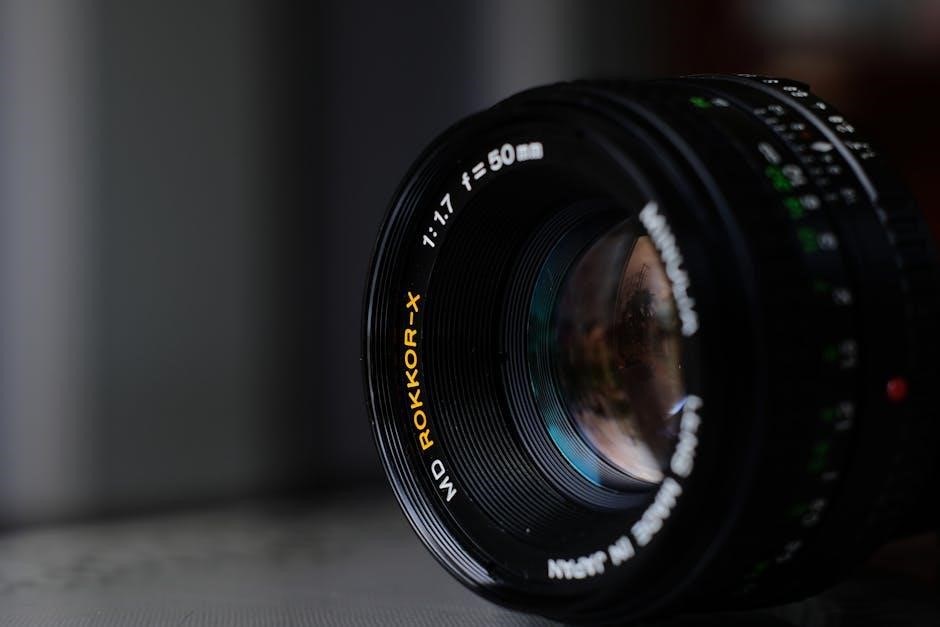
The Maxxum 7000’s body houses essential controls and the viewfinder․ The owners manual details each component, explaining their functions for optimal photographic performance․
Physical Components and Controls
The Minolta Maxxum 7000’s body features a robust build with logically placed controls․ The shutter button, rewind crank, and film advance lever are readily accessible․ A mode dial selects program, aperture-priority, shutter-priority, and manual exposure․
The owners manual meticulously illustrates the location and function of each button and dial․ It explains the film loading process, battery compartment access, and the diopter adjustment for the viewfinder․ Understanding these physical aspects, as detailed in the manual, is crucial for smooth operation and maximizing the camera’s capabilities․
Viewfinder Information and Display
The Maxxum 7000’s viewfinder provides essential shooting information․ The owners manual clarifies the display’s indicators, including autofocus points, exposure settings, and metering mode․ Brightness levels and focus confirmation are clearly visible․
Users can monitor shutter speed, aperture, and exposure compensation directly within the viewfinder; The manual details how to interpret these readings for precise control․ Understanding the viewfinder display, as explained in the manual, is vital for achieving properly exposed and sharply focused photographs․ It enhances the shooting experience․
Battery Compartment and Power Supply
The Minolta Maxxum 7000 utilizes 4 AA batteries for power, detailed within the owners manual․ Proper battery installation is crucial for camera operation․ The manual illustrates the compartment’s location and correct polarity․
Battery life varies depending on flash usage and shooting frequency․ The manual explains how to check remaining battery power via the viewfinder display․ Alkaline or lithium batteries are recommended for optimal performance․ Always remove batteries for extended storage to prevent leakage and potential damage, as outlined in the manual․

Lenses and Compatibility
The Minolta Maxxum 7000 employs the Minolta A-mount, supporting a wide range of lenses․ The owners manual details compatible series and features for optimal performance․
Minolta A-Mount Lens System
The Minolta A-mount, introduced with the Maxxum 7000, represents a significant advancement in lens mounting technology; This system facilitated direct communication between the lens and camera body, crucial for autofocus and aperture control․ The owners manual thoroughly explains the A-mount’s mechanics, detailing how it enables precise electronic control over lens functions․
It’s a bayonet mount, known for its robustness and reliability․ The manual emphasizes the importance of using A-mount lenses to fully utilize the camera’s capabilities, ensuring optimal image quality and performance․ Compatibility extends to later Minolta and Sony Alpha mount lenses with adapters․
Compatible Lens Series
The Minolta Maxxum 7000’s owners manual details compatibility with a wide range of Minolta lenses․ Primarily, it supports the ‘X-600’ series, known for their compact size and excellent optical quality․ The ‘RS’ series, offering superior build and performance, are also fully compatible․ Later ‘HS’ and ‘HS-Zoom’ lenses further expand options․
Adapters allow use of older MC and MD lenses, though autofocus functionality may be limited․ The manual clarifies which lenses offer full electronic communication for features like aperture control and autofocus, maximizing the camera’s potential․ Understanding these series ensures optimal lens selection․
Lens Features and Functions
The Minolta Maxxum 7000 owners manual thoroughly explains lens features․ Compatible lenses transmit aperture information electronically, enabling accurate exposure control․ Autofocus functionality varies; some lenses offer faster, quieter operation․ The manual details how to utilize features like Power Zoom on compatible lenses, providing smooth, variable zoom control․
It also clarifies the function of focus lock and focus priority settings, allowing photographers to tailor autofocus behavior․ Understanding these features, as outlined in the manual, unlocks the full potential of the lens system․
Focusing and Exposure
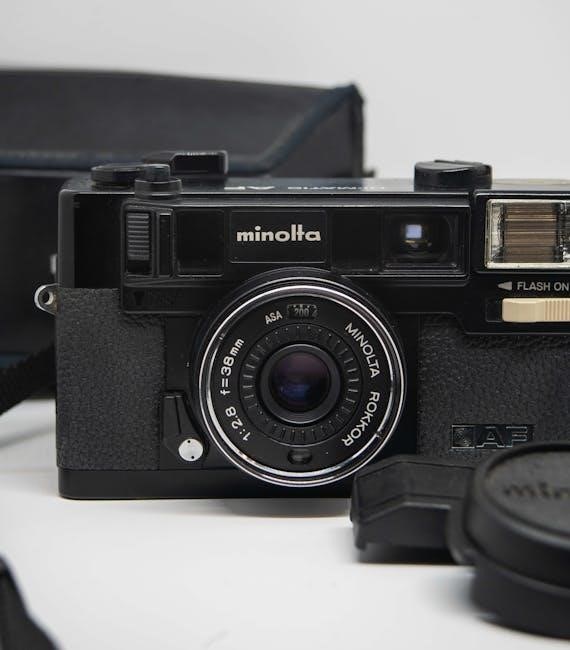
The Minolta Maxxum 7000’s manual details its sophisticated autofocus system and various exposure modes, empowering photographers with precise control over image capture․
Autofocus System Details
The Minolta Maxxum 7000’s autofocus, as explained in the owner’s manual, was revolutionary for its time․ It utilized a multi-point autofocus system, offering three focus sensors for enhanced accuracy․ These sensors allowed the camera to lock onto subjects quickly and reliably, even in challenging lighting conditions․
The manual further clarifies the different autofocus modes available – single, continuous, and manual focus․ Understanding these modes is crucial for capturing sharp images in various shooting scenarios․ The system’s responsiveness and precision were key features, establishing the Maxxum 7000 as a leader in autofocus technology․
Exposure Modes Explained
The Minolta Maxxum 7000’s owner’s manual details five distinct exposure modes; Program mode (P) automates both aperture and shutter speed, ideal for general photography․ Aperture-priority (A) allows user control over depth of field, while shutter-priority (S) governs motion blur․ Manual (M) provides complete creative control․
Additionally, a unique “Sports Action” mode prioritizes fast shutter speeds for freezing motion․ The manual thoroughly explains how each mode impacts image results, empowering photographers to select the optimal setting for their subject and desired aesthetic․ Understanding these modes unlocks the camera’s full potential․
Metering System and Settings
The Minolta Maxxum 7000’s owner’s manual clarifies its dual-center weighted and spot metering systems․ Center-weighted prioritizes the central area, suitable for typical scenes․ Spot metering measures light from a very small area, ideal for challenging lighting or specific subject illumination․
The manual details exposure compensation adjustments (+/- 2 EV) for fine-tuning exposure․ It also explains the AE lock function, allowing users to lock exposure on a specific area before recomposing the shot․ Mastering these settings ensures accurate and creatively controlled exposures․
Using the Flash
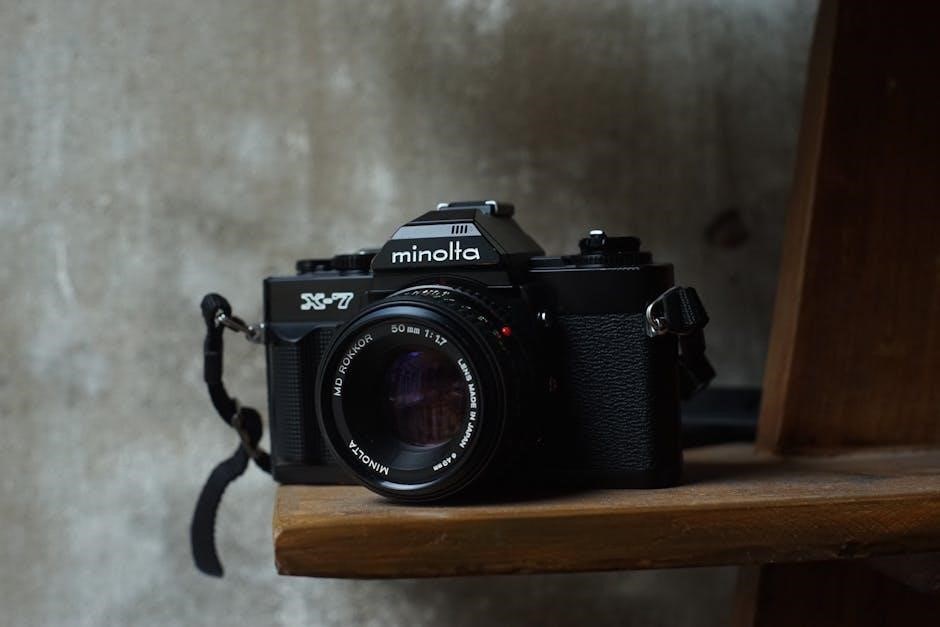
The Minolta Maxxum 7000’s manual details built-in flash modes – auto, fill-in, and off․ It also covers compatibility with external flash units for expanded lighting options․
Built-in Flash Features
The Minolta Maxxum 7000’s integrated flash offers several convenient features, as thoroughly explained in the owner’s manual․ Automatic mode intelligently assesses scene brightness, adjusting flash output for balanced exposures․ Fill-in flash brightens foreground subjects against brighter backgrounds, ideal for portraits․
Red-eye reduction minimizes the common red-eye effect in flash photography․ Manual flash control allows photographers to fine-tune flash intensity for creative effects․ The manual details flash synchronization with shutter speeds, ensuring proper exposure․ Furthermore, it clarifies how to disable the built-in flash when utilizing external lighting solutions, providing versatile control․
External Flash Compatibility
The Minolta Maxxum 7000 boasts excellent compatibility with a wide range of Minolta external flash units, detailed within the owner’s manual․ Utilizing the hot shoe, these flashes offer increased power and advanced features beyond the built-in unit․ The manual clarifies proper synchronization settings for optimal results․
Dedicated flash units communicate directly with the camera, enabling TTL (Through-The-Lens) flash metering for precise exposures․ Non-dedicated flashes can also be used in manual mode, requiring photographers to set flash power manually․ The manual provides guidance on connecting and operating various flash models, maximizing creative control․
Flash Modes and Synchronization
The Minolta Maxxum 7000’s owner’s manual thoroughly explains its flash modes: Auto, Fill-Flash, and Manual․ Auto mode lets the camera determine flash usage, while Fill-Flash provides light even in bright conditions․ Manual mode grants full control over flash output․
Synchronization options include front-curtain, rear-curtain, and high-speed sync (with compatible flashes)․ The manual details how these affect image appearance, particularly with moving subjects․ Proper synchronization prevents dark bands appearing across images when using faster shutter speeds․ Understanding these modes unlocks creative potential․

Advanced Camera Functions
The Minolta Maxxum 7000’s manual details custom settings, remote control operation, and depth of field control, empowering photographers with precise creative adjustments․
Custom Settings and Presets
The Minolta Maxxum 7000’s owners manual extensively covers its customizable features․ Users can tailor the camera to their shooting style, adjusting autofocus sensitivity and metering modes․ Presets allow for quick recall of frequently used settings, streamlining workflow in diverse conditions․
The manual details how to program custom functions, assigning specific actions to buttons for personalized control․ These settings are retained even with battery removal, ensuring convenience․ Exploring these options unlocks the camera’s full potential, adapting it to individual photographic needs and preferences․
Remote Control Operation
The Minolta Maxxum 7000 owners manual illustrates the use of compatible remote control units․ These accessories enable hands-free operation, crucial for long exposures, macro photography, and minimizing camera shake․ The manual details proper connection procedures and operational modes for various remote control models․
It explains how to activate remote functionality within the camera’s menu system, ensuring seamless communication․ Users can trigger the shutter release remotely, facilitating creative compositions and specialized shooting techniques․ Understanding these features expands the camera’s versatility․
Depth of Field Control
The Minolta Maxxum 7000 owners manual thoroughly explains depth of field, a critical aspect of photographic control; It details how aperture settings directly influence the area in focus, impacting image aesthetics․ The manual illustrates the relationship between aperture, focal length, and subject distance․
Users learn to manipulate these variables to achieve desired creative effects, such as isolating subjects or maximizing sharpness throughout the scene․ Depth of field preview functionality assists in visualizing the final result before capturing the image, enhancing photographic precision․
Troubleshooting Common Issues
The Minolta Maxxum 7000 manual addresses error codes and operational problems; It provides solutions for basic maintenance, ensuring optimal camera function and longevity for owners․
Error Codes and Solutions
The Minolta Maxxum 7000’s owners manual details specific error codes displayed in the viewfinder, offering troubleshooting steps; Common issues like “C:00” (shutter curtain failure) or “E:01” (electronic malfunction) are explained․ The manual guides users through potential fixes, such as battery replacement or resetting the camera․
More complex errors may necessitate professional repair․ The manual emphasizes avoiding self-repair for intricate problems, as it could cause further damage․ It also suggests checking the lens connection and ensuring proper battery installation before assuming a camera fault․ Detailed diagrams aid in identifying components․
Common Operational Problems
The Minolta Maxxum 7000 owners manual addresses frequent user issues․ These include autofocus inconsistencies, often resolved by cleaning the autofocus sensors or ensuring sufficient lighting․ Exposure inaccuracies can stem from incorrect metering mode selection or dirty light sensors․ The manual details how to switch modes and clean these vital components․
Film advance problems, like jamming, are also covered, suggesting careful film loading and checking the film compartment for obstructions․ Battery-related issues, such as rapid depletion, are linked to flash usage and cold temperatures, prompting recommendations for battery type and storage․
Basic Maintenance and Care
The Minolta Maxxum 7000 owners manual emphasizes regular cleaning to ensure optimal performance․ Dust should be gently removed from the lens and viewfinder using a blower․ Avoid liquid cleaners on the lens surface; use a specialized lens cloth․ The manual advises periodic inspection of the battery compartment for corrosion․
Proper storage is crucial; keep the camera in a dry, dust-free environment․ Avoid extreme temperatures․ The manual recommends professional servicing for internal cleaning and lubrication, ensuring longevity and preventing complex malfunctions․ Careful handling prevents damage to delicate components․
Technical Specifications
The Minolta Maxxum 7000 features a 35mm film format, a shutter speed range of 2 to 1/2000 seconds, and ISO settings from 25 to 3200, as detailed․
Sensor Details and Resolution
As a film-based SLR, the Minolta Maxxum 7000 does not utilize a digital sensor․ Instead, it employs standard 35mm film, offering a variable resolution dependent entirely on the film stock chosen by the photographer․
Resolution is determined by the film’s grain size and the quality of the lens used․ Higher ISO films generally yield coarser grain, impacting achievable detail․
The manual doesn’t specify sensor details, naturally, but emphasizes proper film loading and handling for optimal image quality․
Different film types—negative, slide, or black and white—further influence the final image characteristics․
Shutter Speed Range
The Minolta Maxxum 7000 boasts a versatile shutter speed range of 2 seconds to 1/2000th of a second, providing flexibility for various shooting conditions․ Additionally, it features a Bulb mode for long exposures exceeding two seconds, ideal for astrophotography or light painting․ The owner’s manual details how to select shutter speeds via the mode dial and corresponding electronic controls․
Automatic modes leverage this range, while manual control allows precise adjustments․ Proper shutter speed selection is crucial for controlling motion blur and achieving desired exposure․
ISO Sensitivity Options
The Minolta Maxxum 7000 offers a range of ISO settings, from 25 to 3200, selectable via the camera’s controls as detailed in the owner’s manual․ Lower ISO values (25-100) are best for bright conditions, ensuring fine detail and minimal noise․ Higher ISOs (400-3200) are suitable for low-light situations, though image noise increases․ Automatic ISO selection is also available, allowing the camera to choose the optimal sensitivity․ Understanding these options is vital for achieving properly exposed images in diverse lighting environments․

Resources and Further Information
The Minolta Alpha/Dynax/Maxxum 7000 service manual provides detailed repair information․ Online forums and communities offer support and shared knowledge for owners․
Service Manual Availability
Locating a service manual for the Minolta Maxxum 7000 is crucial for in-depth repair and maintenance․ These manuals, often available online through vintage camera resource sites, contain detailed schematics, parts lists, and troubleshooting guides․ They are invaluable for experienced technicians or dedicated enthusiasts undertaking complex repairs․
While official Minolta documentation may be scarce, digitized versions frequently circulate within online photography communities․ Expect to find comprehensive information regarding disassembly, adjustment procedures, and diagnostic steps․ Accessing this documentation empowers owners to understand the camera’s intricate workings and potentially restore functionality․
Online Forums and Communities
Numerous online forums and communities dedicated to vintage cameras, particularly Minolta systems, offer invaluable support for Maxxum 7000 owners․ These platforms serve as hubs for sharing knowledge, troubleshooting issues, and locating resources like owners’ manuals and repair advice․
Active members frequently discuss specific camera problems, offer solutions, and even facilitate parts exchange․ Websites dedicated to classic photography often host dedicated threads or sections for Minolta equipment․ Engaging with these communities provides access to collective expertise and a network of fellow enthusiasts․
Additional Documentation
Beyond the official owners manual, supplementary documentation can greatly enhance understanding of the Minolta Maxxum 7000․ Service manuals, though geared towards technicians, provide detailed schematics and repair procedures․ These are often available online for purchase or download, offering insights into the camera’s internal workings․
Independent reviews and articles from the camera’s era can offer contextual information about its features and intended use․ Websites archiving vintage camera literature may also contain relevant brochures or promotional materials, enriching the user’s knowledge․